Arktis: Havis-afsmeltning 2010
| Arktis: Havis-afsmeltning 201027-01-2010 07:32 | |
| rick_uk★★★★☆ (1140) |
Mens vi har endnu 6-8 uger før den forventet arktis havis maximum kan vi måske sparke årets afsmeltnings tråd i gang med at holde øje med hvor meget havis der bliver at tage af iår. Lige for tiden tager isen en pause i sin vinter vokseværk. Den ville sikkert komme i gang igen, men ville eller hvor meget ville pausen påvirke den 2010 havis maximum? http://arctic.atmos.uiuc.edu/cryosphere/ http://nsidc.org/data/seaice_index/images/daily_images/N_timeseries.png Vh rick Vi har hørt varslerne. Klokken tikker....Informerede valg. Tilknyttet billede: 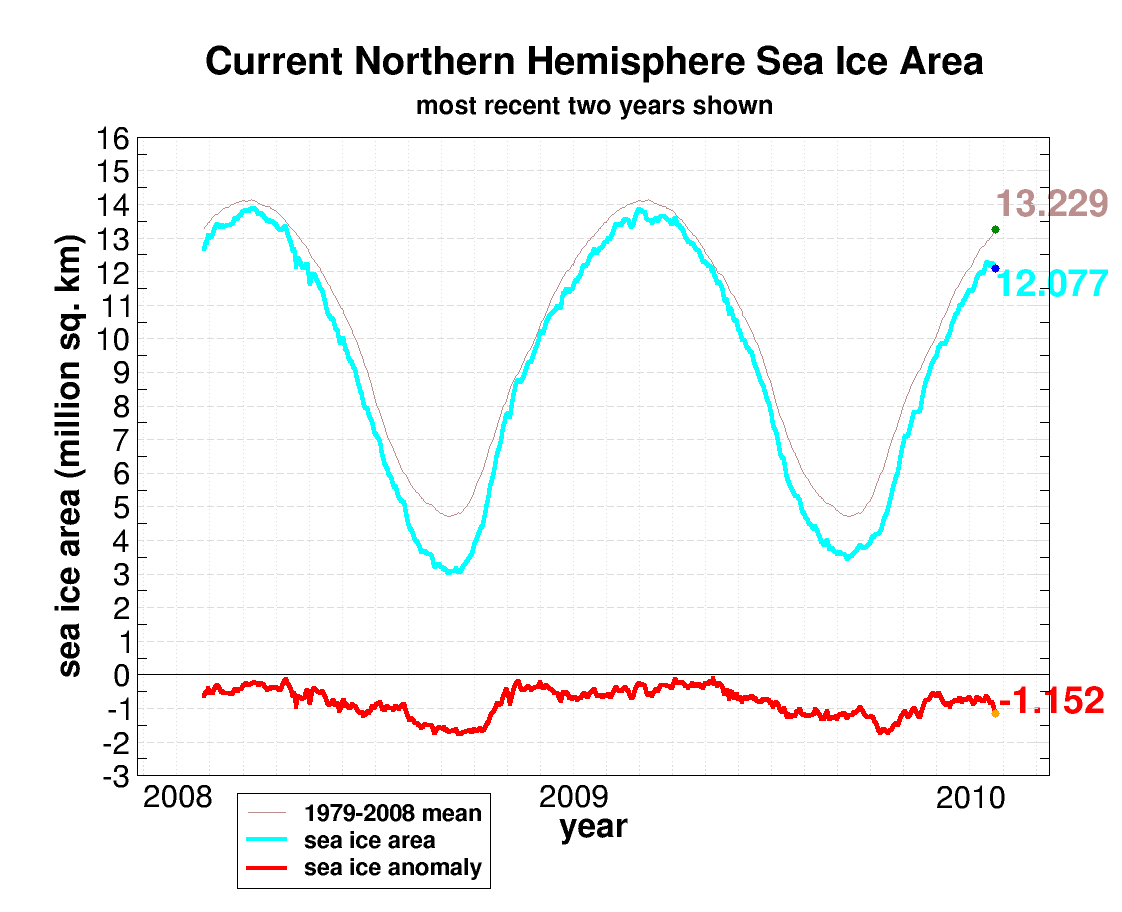
Redigeret d. 27-01-2010 07:34 |
| 06-02-2010 09:11 | |
| rick_uk★★★★☆ (1140) |
Så dannes der igen havis, og afvigelsen har igen sniget sig ind under de minus 1,000,000 km3 Lidt baggrund her fra det nyeste forskning om hvad der forgår deroppe: REUTERS: Arctic climate changing faster than expected (5/2-10) Climate change is transforming the Arctic environment faster than expected and accelerating the disappearance of sea ice, scientists said on Friday in giving their early findings from the biggest-ever study of Canada's changing north. |
| 07-02-2010 10:05 | |
| rick_uk★★★★☆ (1140) |
National Snow and Ice Data Center (NSIDC) kommer her med deres månedlig overblik over tilstanden af den Arktiske havis: Despite cool temperatures, ice extent remains low (3/2-10) De nævne den fald vi så i januar: Sea ice extent increased at a fairly steady rate in the early part of the month and then slowed towards the end of January. A brief slowdown in ice growth is not unusual during winter. + mere info. der sætter det hele i sammenhæng.. |
| 01-03-2010 22:26 | |
| rick_uk★★★★☆ (1140) |
Nu nærmer vi os den maksimale havis udbredelse '10. Hvis kloden har været afkølende siden 1998 (som der hævdes fra visse kanter) burde der ikke kunne ses en effekt efterhånden oppe i de arktiske områder? Man kan selv følger med igen i år fx. HER HER HER eller HER (webcam "Live from the North Pole" når den kommer i april ) Andre gode links?? Vh rick Vi har hørt varslerne. Klokken tikker....Informerede valg. |
| 01-03-2010 23:29 | |
| Kosmos★★★★★ (5371) |
Andre gode links?? - hvad med fx. dette:  eller dette:  |
| 02-03-2010 07:24 | |
| rick_uk★★★★☆ (1140) |
Tak, Kosmos. 2 til her: http://www.athropolis.com/sun-fr.htm (Arktis sol opgang/nedgang) http://saf.met.no/p/quick.html ('Quicklooks') Vh rick Vi har hørt varslerne. Klokken tikker....Informerede valg. |
| 27-03-2010 09:27 | |
| rick_uk★★★★☆ (1140) |
Havis maximum bliver ved....og ved. Der er dog ingen tegn på at vi når op til noget man kan kalde for normalt. Nu er det 7 år siden vi har været der (5 hvis man tager de stærke briller på!) Vh rick Vi har hørt varslerne. Klokken tikker....Informerede valg. Redigeret d. 27-03-2010 09:29 |
| 27-03-2010 11:49 | |
| Hvalrossen★☆☆☆☆ (130) |
rick_uk - her med standard variationer http://nsidc.org/data/seaice_index/images/daily_images/N_stddev_timeseries.png Ser iøvrigt frem til satellitbillederne fra 1920 til 1950 §.-) Redigeret d. 27-03-2010 11:51 |
| 03-04-2010 22:47 | |
| rick_uk★★★★☆ (1140) |
Yep, det er efterhånden lidt at en gammel nyhed at den store nyhed med sæsonens afsmeltning (indtil videre) er at den er ikke endnu kommet i gang Det næste nyhed ser ud til at være at isens udbredelse når 'normal'. Er det en bevis på at den globale opvarmning er aflyst? Mark Serreze of the National Snow and Ice Data Center in Boulder, Colo., which publishes daily sea-ice updates on its website: All of the action is in the Bering Sea. For the past several weeks, we've been under a rather unusual weather pattern, a cold pattern, that's given us this late spurt in ice growth in the Bering Sea. If you look at the rest of the Arctic Ocean proper, it is very warm. KILDE: Arctic ice makes surprising, if temporary, comeback Vh rick Vi har hørt varslerne. Klokken tikker....Informerede valg. |
| 08-04-2010 20:22 | |
| rick_uk★★★★☆ (1140) |
Arktis havis opdatering: National Snow and Ice Data Center: Cold snap causes late-season growth spurt (6/4-10). Arctic sea ice reached its maximum extent for the year on March 31 at 15.25 million square kilometers (5.89 million square miles). This was the latest date for the maximum Arctic sea ice extent since the start of the satellite record in 1979. Vh rick Vi har hørt varslerne. Klokken tikker....Informerede valg. |
| 08-04-2010 20:35 | |
| Kosmos★★★★★ (5371) |
Mark Serreze of the National Snow and Ice Data Center in Boulder, Colo., which publishes daily sea-ice updates on its website: - som WUWT observerer: Of course we know that NSIDC director Mark Serreze is very active with the press. Perhaps some of our media friends reading this should seek out someone at NANSEN for the next sea ice story so that there's some balance. |
| 23-05-2010 22:00 | |
| rick_uk★★★★☆ (1140) |
Scientists say Arctic sea ice melting toward record (19/5-10) [langt citat fjernet] Vh rick Vi har hørt varslerne. Klokken tikker....Informerede valg. Redigeret af branner d. 03-03-2013 18:22 |
| 08-06-2010 20:25 | |
| rick_uk★★★★☆ (1140) |
Så kommer NSIDC med deres opdatering af den sidste måneds udvikling af 2010 smeltesæsonen. Findes HER - 8/6-10.In May, Arctic air temperatures remained above average, and sea ice extent declined at a rapid pace. At the end of the month, extent fell near the level recorded in 2006, the lowest in the satellite record for the end of May. Analysis from scientists at the University of Washington suggests that ice volume has continued to decline compared to recent years. However, it is too soon to say whether Arctic ice extent will reach another record low this summer—that will depend on the weather and wind conditions over the next few months. Vh rick Vi har hørt varslerne. Klokken tikker....Informerede valg. Tilknyttet billede: 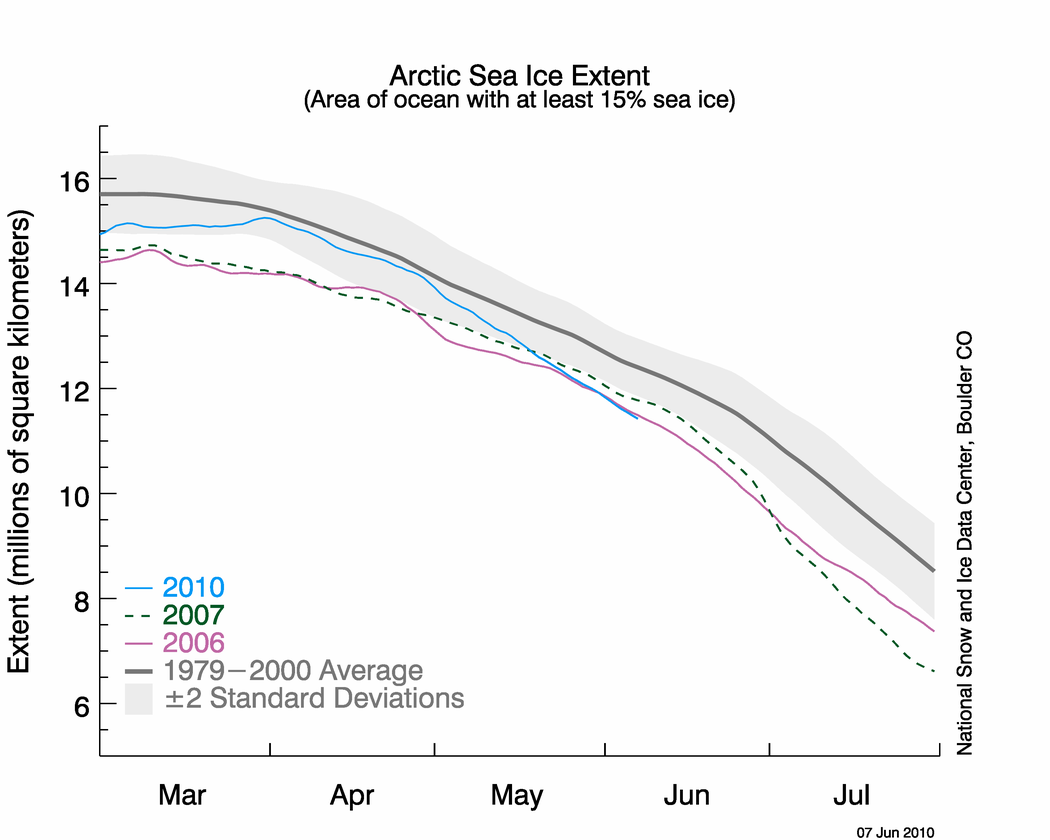 |
| 08-06-2010 20:33 | |
| rick_uk★★★★☆ (1140) |
Se også afsnitet ""Models indicate low ice volume" + linksIce extent measurements provide a long-term view of the state of Arctic sea ice, but they only show the ice surface. Total ice volume is critical to the complete picture of sea ice decline. Numerous studies indicate that sea ice thickness and volume have declined along with ice extent.... Vh rick Vi har hørt varslerne. Klokken tikker....Informerede valg. Tilknyttet billede: 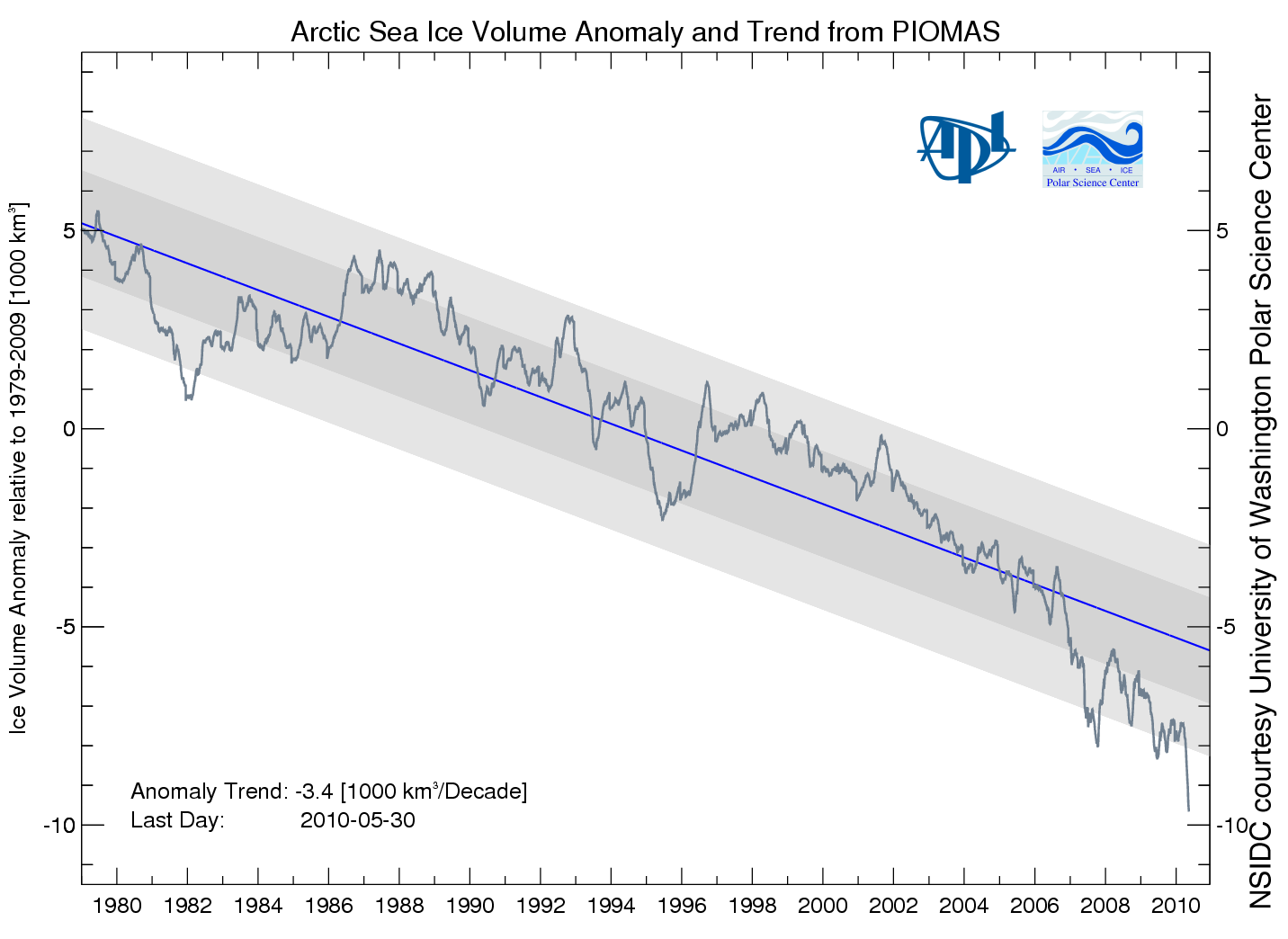 |
| 24-07-2010 16:11 | |
| rick_uk★★★★☆ (1140) |
Mulighed at nordvestpassagen åbner igen i år. Det ville så være 4. år i træk. Ruten igennem 'Parry Channel' (den dybeste og bredeste rute) kan ses HER. Korterne 7 og 9 giver et overblik over hele ruten. (Opdateres dagligt) Havisen i området kan også ses HER Havisen i hele det arktiske område kan ses HER Kort over nordvestpassagen HER Vh rick Vi har hørt varslerne. Klokken tikker....Informerede valg. Redigeret d. 24-07-2010 16:20 |
| RE: Hård opbremsning?24-07-2010 17:34 | |
| Kosmos★★★★★ (5371) |
Siden slutningen af juni er tabet af Arktisk havis dog bremset voldsomt op.(Kilde) Er glasset halvt fyldt - eller halvt tømt? |
| 24-07-2010 21:01 | |
| rick_uk★★★★☆ (1140) |
Hmm..Hvor ligger nordvestpassagen? The Canadian Arpichelago. Hvordan stå det til lige der? Current Canadian Archipelago Sea Ice Area Lidt mangler der i glasset. Hvad siger du, Kosmose. Åbner NVpassagen i år? Eller ej?? |
| 24-07-2010 21:05 | |
GLAR ★★★★☆ ★★★★☆(1023) |
@Rick-UK >>Mulighed at nordvestpassagen åbner igen i år. Det ville så være 4. år i træk.<< Nordvest-passagen har i princippet været åbent i rigtigt mange år... det kommer kun an på hvilke skibe der besejler ruten. Det kræver at større skibe har udviddet manøvreringsmuligheder (f.eks. kabellæggere eller skibe med kraftig bovpropel) almindelig skibe der kræver 12-15 kts styrehastighed er udelukket p.g.a. isbjerge m.v. F.eks. kan lystsejlere på omkring 30 ft sejle næsten ubesværet. |
| RE: nordvestpassagen25-07-2010 08:50 | |
kulden-varmen ★★★★★ ★★★★★(2597) |
rick_uk skrev: nordvestpassagen åbner næsten hvert år, på nær et kort stykke hvor isen pakker tæt. Hvis vinden vender så åbner det. Men ellers er den lukket. |
Deltag aktivt i debatten Arktis: Havis-afsmeltning 2010:
Lignende indhold
| Debatter | Svar | Seneste indlæg |
| Arktis vil bare ikke smelte | 2 | 30-04-2022 00:30 |
| Højeste isdække i arktis i over 18 år | 5 | 08-01-2022 00:41 |
| Arktisk havis - et reality check | 29 | 28-10-2019 22:22 |
| Den minimale/maksimale isudbredelse ved Arktis/Antarktis | 6 | 11-02-2016 22:28 |
| Arktis var koldere end i dag trods globalt meget varmere | 1 | 28-12-2015 15:06 |
| Nyheder | Dato |
| Varm maj i Arktis og Nordsibirien | 25-06-2011 06:39 |
| Mængden af is i Arktis topper usædvanlig sent | 13-04-2010 07:09 |
| Mere is i Arktis efter kold vinter | 07-04-2010 10:25 |
| Vinden skyld i en stor del af is-tabet i Arktis | 23-03-2010 05:33 |
| Pris for afsmeltningen i Arktis: over 10 billioner kroner | 08-02-2010 10:02 |