Naturen røber at verden varmer op
| 16-04-2010 21:11 | |
| rick_uk★★★★☆ (1140) |
Ny forskning fra australsk CSIRO (The Commonwealth Scientific and Industrial Research Organisation is Australia's national science agency and one of the largest and most diverse research agencies in the world.) Ocean salinities show an intensified water cycle (14/4-10) Vh rick Vi har hørt varslerne. Klokken tikker....Informerede valg. |
| 20-05-2010 20:14 | |
| rick_uk★★★★☆ (1140) |
DMI: Tanganyikasøen har ikke været varmere i 1.500 år (20/5-10) Vh rick Vi har hørt varslerne. Klokken tikker....Informerede valg. |
| 08-06-2010 00:34 | |
| rick_uk★★★★☆ (1140) |
UNIVERSITY OF CALIFORNIA NEWS:Climate change leading to major vegetation shifts around the world (4/6-10) Vh rick Vi har hørt varslerne. Klokken tikker....Informerede valg. |
| 29-07-2010 11:08 | |
| rick_uk★★★★☆ (1140) |
VIDENSKAB DK: Global alarm: Varmere verdenshave dræber livsvigtig plankton (29/7-10) Vh rick Vi har hørt varslerne. Klokken tikker....Informerede valg. |
| 29-07-2010 11:15 | |
| Kosmos★★★★★ (5372) |
Vi har hørt varslerne. Klokken tikker....Informerede valg - bemærk kommentaren, samt artiklen her. |
| 29-07-2010 13:54 | |
GLAR ★★★★☆ ★★★★☆(1023) |
@Kosmos Ja... jordens normaltilstand er ISTID, men den er ikke lige om hjørnet, men Klokken tikker ! |
| 24-09-2010 23:41 | |
| rick_uk★★★★☆ (1140) |
TV2VERJET: Varmere vejr giver eksotiske fisk i Danmark (23/9-10)De seneste 4-5 år har vi oplevet, at der er kommet flere eksotiske arter til her i farvandet rundt om Nordjylland. Det er usædvanligt, og det kan jo hænge sammen med at havtemperaturen stiger, siger Peter Gregersen fra Nordsøen Oceanarium til TV2/VEJRET. Vh rick Vi har hørt varslerne. Klokken tikker....Informerede valg. |
| 25-09-2010 01:16 | |
| Frank Lansner★★★★★ (5727) |
Verden har varmet op før. Jeg er ved at ligge sidste hånd på et nyt skriv. Her ser jeg udelukende på temperatur data fra interglaciale perioder, dvs perioder hvor forhold på Jorden minder om dem vi har nu. Her er de små 100 temperaturforøgelser der er at finde i vostok data - og så sammenholder vi med temperatur stigningen 1900-2010. Ja Antarktiske data er ikke globale data, men for at hævde at opvarmningen 1900-2010 er helt helt speciel, så skal man nok have nogle data der viser dette. De Antarktiske data viser ikke noget specielt ved de ca 0,7 K i temperatur stigning. Så man skal nok lede et andet sted, det var måske en god idé? Vindmøller er IN!! Vedvarende energi er IN!!! Men vi må aldrig ofre åben og sund videnskab - heller ikke når det gælder klima. Tilknyttet billede: 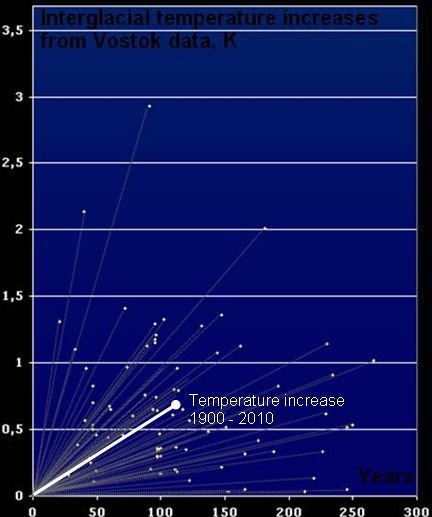 |
| 25-09-2010 12:34 | |
| rick_uk★★★★☆ (1140) |
..for at hævde at opvarmningen 1900-2010 er helt helt speciel.. Det kan være at jeg har i de sidste 30 år misforstået noget helt fundementalt i klima området, men er det ikke grunden til den igangvarende opvarmningen der er pointen? Gennem de sidste 50 år er det sandsynligt, at solpåvirkning og KILDE: Klimaændringer 2007: Synteserapport Sammendrag for Beslutningstagere Ellers er vi tilbage til starten igen (hvilket ville ikke undre mig ) med argumentet "Det hat været varmere i fortiden derfor er den igangværende opvarmning naturligt" |
| 09-03-2011 12:18 | |
| rick_uk★★★★☆ (1140) |
SCIENCE DAILY: Melting Ice Sheets Now Largest Contributor to Sea Level Rise (8/3-11) Vh rick Vi har hørt varslerne. Klokken tikker....Informerede valg. |
| 09-03-2011 13:16 | |
kulden-varmen ★★★★★ ★★★★★(2597) |
rick_uk skrev: Problemerne er mange ved den slags undersøgelser. Først og fremmest er indlandsisen på Grønland og Anataktisk ikke direkte koblet på den globale temperatur. Jorden kan godt generelt blive varmere samtidigt med at isen øges på Grønland og Anataktisk. Hvad der dog er værre er at hvis havstigningen skyldes afsmeltning af indlandsis, så må verdenshavene have aftagende temperaturer, da de stiger med aftagende hastighed. Og det er ikke isen eller smeltevandet som afkøler havet, da havet er så stort i forhold til smeltevandet. |
| 09-03-2011 13:39 | |
| rick_uk★★★★☆ (1140) |
KV: Det siger sig selv at med al ny forskning skal man tage det med lidt forbehold og se om det er be- eller afkraftet senere. Det hører til sagens natur. du skrev: ...så må verdenshavene have aftagende temperaturer, da de stiger med aftagende hastighed. Jeg kan ikke får det til at hænge sammen med daterne. Hav stigning fra 1870-2000 var i gennemsnit 1,7mm / år. Stigningen fra 1993-nu har været 3,27mm / år. Se: NASA - Global Climate Change Key Indicators |
| 09-03-2011 13:52 | |
| Kosmos★★★★★ (5372) |
Jeg kan ikke får det til at hænge sammen med daterne. Hav stigning fra 1870-2000 var i gennemsnit 1,7mm / år. Stigningen fra 1993-nu har været 3,27mm / år - nu er dataene fra før satellit-æraen nok ikke direkte sammenlignelige med nutidens!? Og hvorfor kigger du ikke på 'vore egne' havdata? 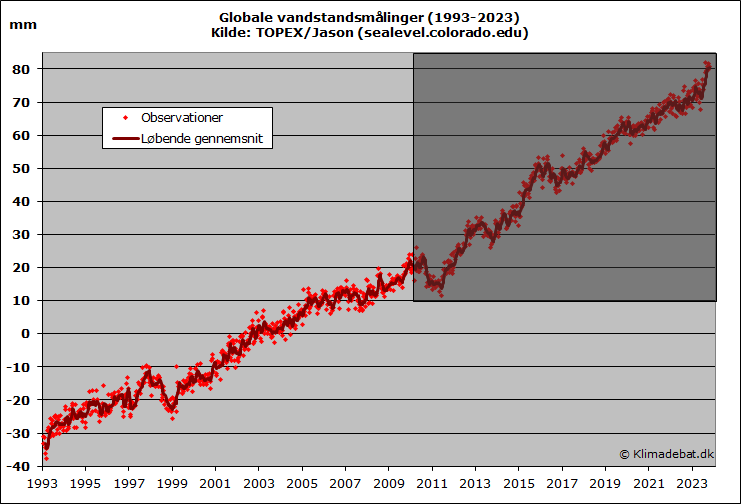 |
| 10-03-2011 10:38 | |
| rick_uk★★★★☆ (1140) |
ENVIRONMENTAL RESEARCH WEB: Climate change causing demise of lodgepole pine in western North America (4/3-11) Vh rick Vi har hørt varslerne. Klokken tikker....Informerede valg. |
| 11-03-2011 07:09 | |
| rick_uk★★★★☆ (1140) |
Ny forskning her om grunderne bag Grønlands 2010 rekord smeltnings sæson. ENVIRONMENTAL RESEARCH LETTERS: The role of albedo and accumulation in the 2010 melting record in Greenland (Jan.2011) |
| 31-03-2011 13:08 | |
| rick_uk★★★★☆ (1140) |
Anchorage Daily News: Warming brings unwelcome change to Alaska villages (28/3-11)Beavers are among the unwelcome changes associated with climate change..... Vh rick Vi har hørt varslerne. Klokken tikker....Informerede valg. |
| 27-06-2011 13:59 | |
| rick_uk★★★★☆ (1140) |
REUTERS: Arctic-crossing algae, whale show threat to Atlantic (26/6-11) AP: Whales, plankton migrate across Northwest Passage (26/6-11) TELEGRAPH: Warming oceans cause largest movement of marine species in two million years (26/6-11) Vh rick Vi har hørt varslerne. Klokken tikker....Informerede valg. |
| 17-07-2011 11:34 | |
| rick_uk★★★★☆ (1140) |
THE HINDU: Mountaineers see dramatic climate change in the Himalayan region (17/7-11) Vh rick Vi har hørt varslerne. Klokken tikker....Informerede valg. |
| 20-07-2011 23:10 | |
| rick_uk★★★★☆ (1140) |
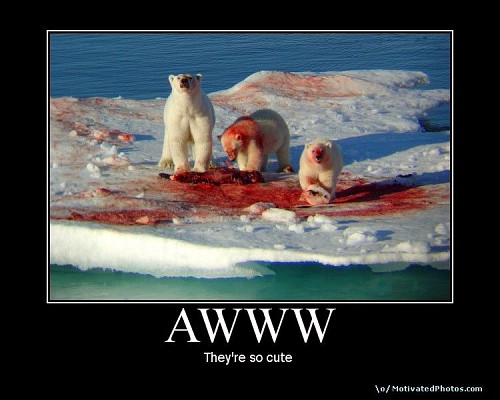
NATIONAL GEOGRAPHIC: Longest Polar Bear Swim Recorded—426 Miles Straight Vh rick Vi har hørt varslerne. Klokken tikker....Informerede valg. |
| 21-07-2011 14:16 | |
| Hvalrossen★☆☆☆☆ (130) |
@rick_uk - når det kommer fra Irland må det jo kunne svømme langt, men dengang havde man jo heller ikke satellitter §.-)http://www.guardian.co.uk/science/2011/jul/07/polar-bear-ancestors-ireland |
| 21-07-2011 14:20 | |
| Hvalrossen★☆☆☆☆ (130) |
 |
| 02-09-2011 07:04 | |
| rick_uk★★★★☆ (1140) |
MSNBC: Second giant ice island set to break off Greenland glacier (1/9-11) Vh rick Vi har hørt varslerne. Klokken tikker....Informerede valg. |
| 09-03-2012 15:36 | |
| rick_uk★★★★☆ (1140) |
LIVE SCIENCE: Spring Shows Earlier and Earlier for Many Plants, Animals (8/3-12) Vh rick Vi har hørt varslerne. Klokken tikker....Informerede valg. |
| 09-03-2012 19:23 | |
| GLAR★★★★☆ (1023) |
Skyldes muligvis UHI effekten ? |
| 10-03-2012 08:14 | |
| rick_uk★★★★☆ (1140) |
1. Tag tid at tænke den argument logisk igennem. 2. British butterflies are also showing up sooner Even though the extent of most butterfly habitats has declined, a key finding of the Butterflies for the New Millennium survey is that 15 species have spread substantially since the 1970s. Climate change is almost certainly the cause. Two species, the Essex Skipper and Brown Argus have more than doubled their British distribution in the past 20 years. In addition, the Holly Blue, Comma, Purple Hairstreak, Marbled White, Speckled Wood and Ringlet have all expanded by more than 50%. Other climate-related changes are evident too. Butterflies are appearing earlier in the year and some species are managing to fit in an extra generation during the summer. Kilde Nogen har glemte at fotælle sommerfuglene på landet at det ikke er blevet varmer uden for byen? |
| 28-03-2012 09:41 | |
| rick_uk★★★★☆ (1140) |
CLIMATE CENTRAL: State-by-State Look at How Early Spring Has Arrived (23/3-12)In the interactive above, you can see how much earlier spring has arrived state-by-state.....hover over any stae and it will display two boxes.... Urban Heat Island effect? I think not. Vh rick Vi har hørt varslerne. Klokken tikker....Informerede valg. |
| 28-03-2012 10:15 | |
| Kosmos★★★★★ (5372) |
In the interactive above, you can see how much earlier spring has arrived state-by-state... - til gengæld ikke meget 'early spring' i Ishavet!: 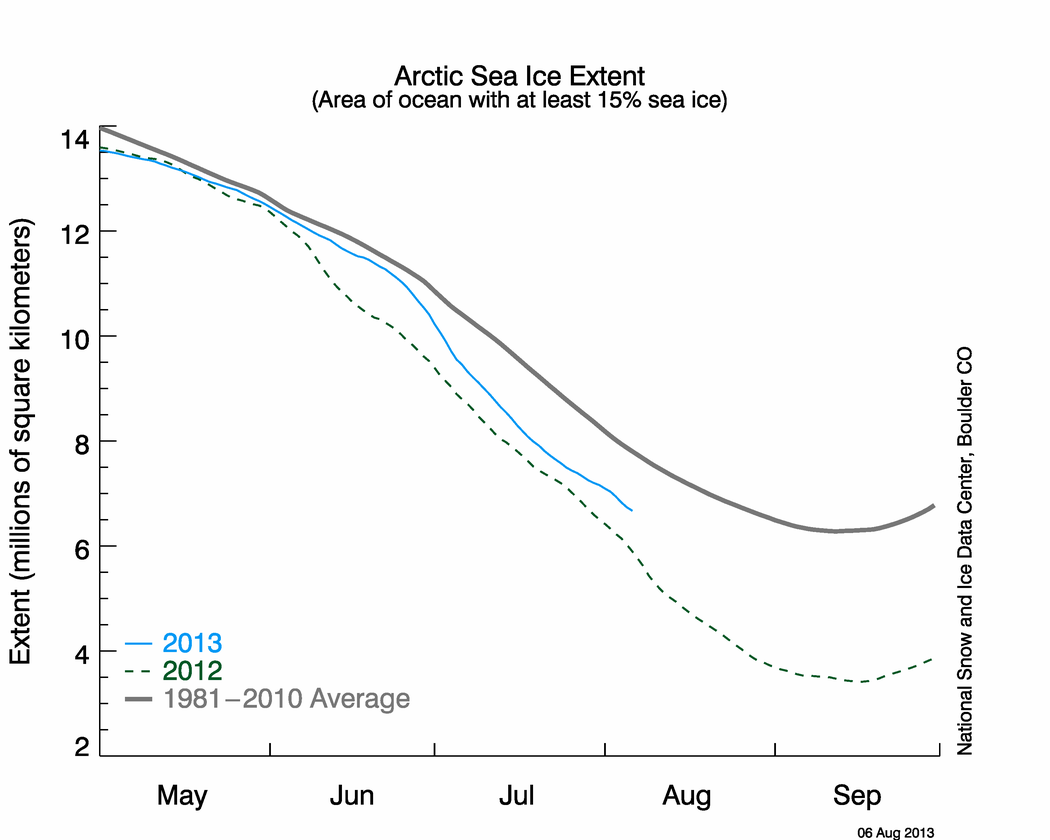 Og omkring Antarktis må der vel være tale om 'late summer'?: 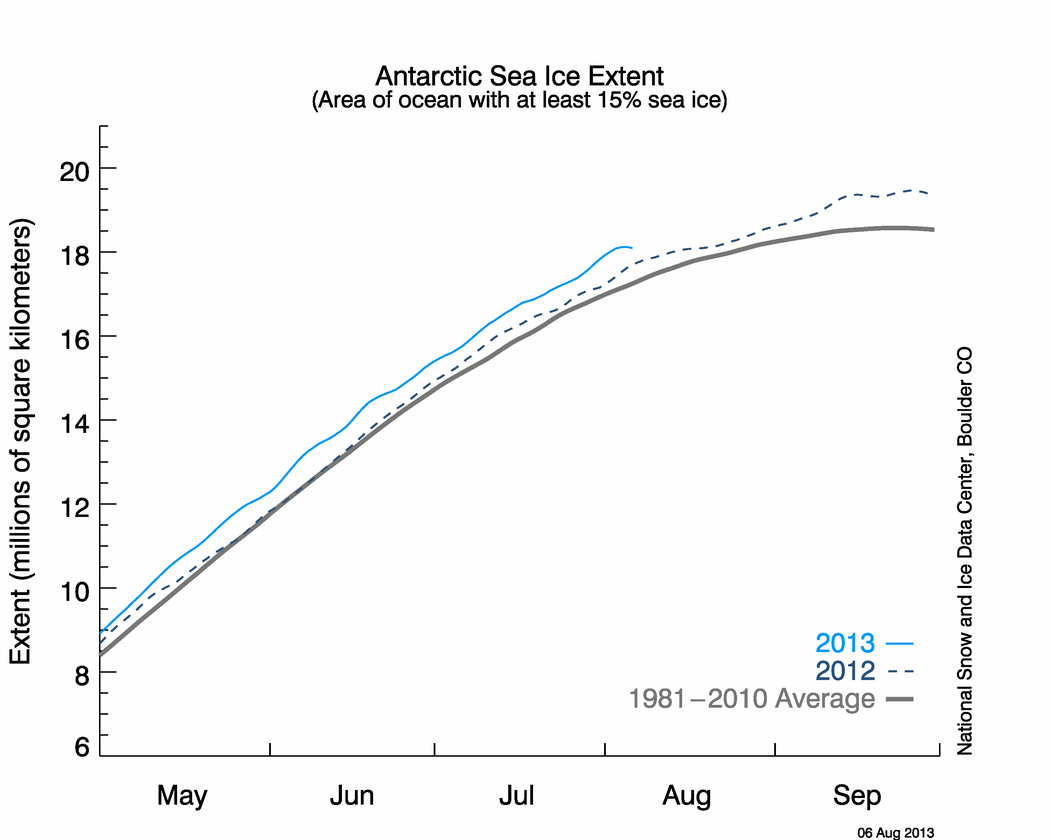 |
| 09-05-2012 21:26 | |
| rick_uk★★★★☆ (1140) |
GUARDIAN: Warm water marine species spreading northwards into British waters (8/5-12) Marine Climate Change Impacts Partnership og Nordsø-fiskere melder sig til klima sammensværgelsen Vh rick Vi har hørt varslerne. Klokken tikker....Informerede valg. |
| 10-05-2012 00:15 | |
| John Niclasen★★★★★ (6443) |
warm water marine species are spreading northwards Vil det sige, at biodiversiteten forøges i de koldere nordlige have? climate change is already changing the natural environment Øh, er det ikke netop naturligt, at der sker klimaforandringer? Det har vel stået på i mere end 4,5 mia år. |
| 10-05-2012 07:28 | |
| rick_uk★★★★☆ (1140) |
John N, Man kan læs lidt om klima myter fx. her eller her. vh, Rick |
| 10-05-2012 09:42 | |
| John Niclasen★★★★★ (6443) |
Dit første link har 173 punkter, det andet 17. Jeg kan kun se det, som hvad det er, forsøg på at lede opmærksomheden væk fra det centrale. Der findes intet videnskabeligt bevis for, at menneskelig udledning af CO2 er årsag til en stor del af de klimaforandringer, vi oplever, og som altid er foregået i Jordens historie. Rick, hvad er din motivation for at mene, som du gør? Og hvad er din motivation for at deltage i debatter som her? Edit: Af de 173 punkter på SkepticalScience siden er mange lige så nemme at tilbagevise som påstandene om, at mennesket ikke har været på Månen. Det kunne da være munter fritidsbeskæftigelse at gå dem alle igennem, men også lidt spild af tid. Redigeret d. 10-05-2012 09:48 |
| 11-05-2012 09:13 | |
| rick_uk★★★★☆ (1140) |
John,...klimaforandringer....har vel stået på i mere end 4,5 mia år.Det er en meningsløst argument mod igangvarende opvarmning af kloden Der findes intet videnskabeligt bevis for, at menneskelig udledning af CO2 er årsag til en stor del af de klimaforandringer, vi oplever, og som altid er foregået i Jordens historie. Der findes masser af info på nettet skrevet af folk mere qvalificeret end dig og mig. Vi må selv vælger hvem vi vil tror på. ...hvad er din motivation for at mene, som du gør? Og hvad er din motivation for at deltage i debatter som her? Jeg har interesseret mig for 'klimaændring' siden jeg først læst om det i 1960erne, og anerkender i store træk 'mainstream' klimavidenskab. Jeg har følgt med siden mens klimaet har udviklet sig stort set som den etableret klimavidenskab sagde at det ville. Mine beskedne bidrag her er ment som en delvis modvægt af realitet for det misinformation, disinformation og sammensværgelsesteorier som flere kommer med her i debatten. Jeg var så høflig at svare, John. Hvorfor tror du at kloden har varmet i de sidste 50 år, og hvorfor deltager du i debatten her? Vh rick Vi har hørt varslerne. Klokken tikker....Informerede valg. |
| 11-05-2012 10:42 | |
| pifpafpuf★★★☆☆ (771) |
Mens vi venter på KFL.... http://www.youtube.com/watch?v=aob_xlAXsvs Vi mangler en langtidsanalyse fra KFL, fra nogle af de danske målestationer, der ikke kan påstås at være påvirket af UHI.....Landbohøjskolen er bare ikke repræsentativ. Men kigger man på månedsanomali over de danske gennemsnitstemperaturer, så sker udviklingen i DK ikke lineært - men nærmere i spring 60'erne og 70'erne - op til slut 80'erne var bare skide kolde. Kim Larsen sang - "det er en kold tid som vi lever i"- og jeg sprang som soldat i et par af vintrene i 80'erne. Kim Larsen havde ret, det var bare 'skide' koldt. Fra ca. 88' sker der så et hop tilbage til temperaturniveauer vi kan genkende fra 30-50'erne. Fra familiebilleder, fra sommerhuset, fra dengang før krigen, kan jeg bare se at de hyggede sig - frigjorte - og generelt uden meget tøj på. Men fra 88' til i dag er udviklingen i de danske temperaturer bare 0.0. Så når vi sammenligner med klimanormalen 60-90, er det tilsyneladende hele tiden varmt. Men sandheden er nærmere - at den nuværende klimanormal bare er 'skide' kold. |
| 11-05-2012 11:46 | |
| John Niclasen★★★★★ (6443) |
rick_uk skrev:...klimaforandringer....har vel stået på i mere end 4,5 mia år.Det er en meningsløst argument mod igangvarende opvarmning af kloden Du citerede en tekst, der fortæller om arters vandring, og at det er et stærkt bevis på, at klimaforandringer allerede ændrer det naturlige miljø. Som om at det er signal til, at vi straks må handle og se at få reddet Jorden. Jeg påpeger, at sådan har det altid været. Nogle gange bliver det varmere, nogle gange koldere. I Jordens historie er det normen, at klimaet ændrer sig, og det hører til sjældenhederne, at klimaet er konstant over længere perioder. ...hvad er din motivation for at mene, som du gør? Og hvad er din motivation for at deltage i debatter som her? Jeg er uenig. Der er bl.a. spået vedvarende voldsomme temperaturstigninger og voldsomme havstigninger siden 80'erne. Faktum er, at temperaturen ikke har udviklet sig meget de seneste ca. 10 år. Opvarmningen siden 70'erne ser ud til at være gået i stå. Og det er heller ikke til at få øje på katastrofale havstigninger. Der er også spået stadigere oftere og voldsommere storme og orkaner. Vi befinder os nær et 30-35 års minimum på den front: Global Tropical Cyclone Activity Update Mine beskedne bidrag her er ment som en delvis modvægt af realitet for det misinformation, disinformation og sammensværgelsesteorier som flere kommer med her i debatten. Det er vist alm. accepteret, at der har været temperaturfald fra omkring 1940-45 til midten af 70'erne, derefter stigning frem til slutningen af 90'erne, og siden da nogenlunde konstant temperatur. Så de sidste 50 år er kloden måske blevet varmere i omkring 20 år, blevet koldere i omkring 20 år og er hverken eller i de sidste år. Jeg deltager i debatten, fordi jeg kan se, at rigtig mange mennesker har et helt forkert syn på Jordens klima og CO2s indflydelse på livet på Jorden. Og det irriterer mig, at klimaforskere, som skulle være videnskabsfolk, udviser så ringe videnskabelig forståelse. Jeg har interesseret mig for videnskab hele mit liv, og jeg har taget en videnskabelig uddannelse i fysik og astronomi i de seneste år. Jeg kan forestille mig, at videnskaben generelt kommer til at lide et gevaldigt nederlag, når det går op for den alm. dansker og den alm. befolkning på denne klode, at såkaldte "videnskabsfolk" (klimaforskere) har så ringe forståelse for, hvad de har med at gøre. Det får den effekt, at man generelt bliver mistroisk overfor al videnskab, og dermed også den gren, jeg vil beskæftige mig med. Dertil kommer, at hvis fejlagtige teorier som "teorien om katastrofal menneskeskabt global opvarmning" får lov til at udvikle sig til det ekstreme, så kan det få alvorlige menneske- og miljø-mæssige konsekvenser for Jorden. Kig på tidligere teorier af samme skuffe, som Eugenics og Lysenkoism, for eksempler på, hvor galt det kan gå. Når jeg læser artikler om klima, får jeg ofte karikatur-billedet af den religiøse tosse, der render rundt nede på gaden med skiltet "VERDEN GÅR UNDER I MORGEN". Edit: Jeg vil gerne påpege, at det ikke er alle klimaforskere, der mangler den nødvendige videnskabelige forståelse til at udtale sig, som de gør. Der findes gode videnskabsfolk, der beskæftiger sig med klima, men det er desværre for det meste alarmisterne, der råber højest. Redigeret d. 11-05-2012 11:56 |
| 11-05-2012 20:02 | |
| Jørgen Petersen★★★★★ (4852) |
@ John Jeg kan kun være enig med dig, når du skriver: "Jeg kan forestille mig, at videnskaben generelt kommer til at lide et gevaldigt nederlag, når det går op for den alm. dansker og den alm. befolkning på denne klode, at såkaldte "videnskabsfolk" (klimaforskere) har så ringe forståelse for, hvad de har med at gøre. Det får den effekt, at man generelt bliver mistroisk overfor al videnskab, og dermed også den gren, jeg vil beskæftige mig med." Jeg har oplevet præcis det samme i relation til samfundsøkonomi og politik (økonomisk politik). Her sker det ofte, at økonomisk videnskab bliver maltrakteret af diverse politikere og interesseorganisation, når disse personer forsøger at varetage deres snæversynede interesser. Det er det desværre meget svært at gøre moget ved. Kun når de gør det for groft og uigennemtænkt, kan man give dem en lektion i elementær samfundsøkonomi. Det bryder de sig i reglen ikke om. |
| 11-05-2012 23:35 | |
| rick_uk★★★★☆ (1140) |
John, Thank you for you candor! Der er bl.a. spået vedvarende voldsomme temperaturstigninger og voldsomme havstigninger siden 80'erne. "VERDEN GÅR UNDER I MORGEN". Værsgo at rette mig, men personligt har jeg aldrig læst sådanne udtalelser fra 'mainstream' klimavidenskabelige kilder. Klimabenægternes propaganda maskine har travlt med at strikke klimavidenskabelige stråmænd som siger "Verden går under imorgen". Nogle miljø aktivister hævde det samme. Som sagt - har jeg aldrig læst sådanne fra 'mainstream' klimavidenskabelige kilder. Hvad pressen kan finde på at skrive og de drejninger de tillægger videnskabelige resultater er tit helt ude i hampen. ...det irriterer mig, at klimaforskere, som skulle være videnskabsfolk, udviser så ringe videnskabelig forståelse. Jeg har interesseret mig for videnskab hele mit liv, og jeg har taget en videnskabelig uddannelse i fysik og astronomi i de seneste år. Jeg kan forestille mig, at videnskaben generelt kommer til at lide et gevaldigt nederlag, når det går op for den alm. dansker og den alm. befolkning på denne klode, at såkaldte "videnskabsfolk" (klimaforskere) har så ringe forståelse for, hvad de har med at gøre. Hvis du ved bedre og deres misforståelse er så åbenlyst burde du ikke irettesætte dem?...eller holder du til sammensværelsesteorien at sandheden kan ikke komme frem fordi 'de' har et jerngreb om forskningen? Faktum er, at temperaturen ikke har udviklet sig meget de seneste ca. 10 år. Hvis det var sandt...hvad så? Siden hvornår har 10 år været 'klima'? Benægtere har brokket sig (selv her på debatten) at engang 100 år er nok til at vise en tendens i temperaturen! Lad os nu se hvad de næste 5-10 år bringer... Der findes gode videnskabsfolk, der beskæftiger sig med klima, men det er desværre for det meste alarmisterne, der råber højest Define 'alarmist'. ------------------------------------------------------------------------------ Det er min overbevisning (pga. anerkendelse af 'mainstream' klimavidenskab) at menneskeheden får alvorlige problemer pga. menneskeskabt klimaændringer i fremtiden (ikke imorgen). De ville ikke føre til klodens undergang, men ville give verdensamfundet alvorlige problemer. Hvor og hvordan problemerne ville ramme kan vi ikke ved. Hvordan samfundet ville reagere er uforudseelig - det er trods alt et sandt kaotisk system. De ukendte detaljer i videnskabens forståelse af klimaet og hvordan klimaet ville reagere til opvarmningen kunne føre til at tingene bliver ikke så dystert som forventet. Det kunne også føre til at tingene bliver værre... Klimavidenskaben siger at verden har kun få år tilbage til at få styre på udledningen af drivhusgasser. Efter at har iagtaget regeringers opførlsel igennem nogle år er det er min overbevisning at vi når det ikke. Ok. Kalde mig en af 'alarmisterne'. Pt er det blivet ret tjekket at være benægter - "jeg er anderledes, jeg følger ikke bare mængden, jeg tænker selvstændig, jeg har en dybere forståelse" osv. Hvad vi synes om situationen er klimaet ligeglad med.... Vh rick Vi har hørt varslerne. Klokken tikker....Informerede valg. |
| 12-05-2012 01:10 | |
| John Niclasen★★★★★ (6443) |
rick_uk skrev:Der er bl.a. spået vedvarende voldsomme temperaturstigninger og voldsomme havstigninger siden 80'erne."VERDEN GÅR UNDER I MORGEN". Eksempler på forudsigelser af voldsomme temperaturstigninger kan findes i Hansen et al. 1988: http://pubs.giss.nasa.gov/abs/ha02700w.html Der gives 3 scenarier, A, B og C, hvor A forudsætter eksponentiel stigning i forcings, bl.a. udledning af CO2, og derfor forudsiger den mest voldsomme temperaturstigning. Der forudsiges også en stigning i temperaturen et stykke oppe i atmosfæren ved lave breddegrader (temperatur fingeraftryk). Et senere eksempel på voldsom temperaturudvikling er Manns "hockey-stick", som også havner i IPCC 2001 rapporten: http://en.wikipedia.org/wiki/File:Hockey_stick_chart_ipcc_large.jpg Af denne graf ses ikke varmeperioden for ca. 1.000 år siden, som vi fra mange kilder ved var tilfældet, ligesom den lille istid stort set er væk. Til gengæld en voldsom temperaturudvikling i nyere tid. I mine øjne et tydeligt konstrueret skræmmescenarie, der ikke har meget med virkeligheden at gøre. Disse kilder (personerne og IPCC) går for at være 'mainstream' videnskabelige. Er du enig? Hvis du ved bedre og deres misforståelse er så åbenlyst burde du ikke irettesætte dem? Disse folk og organisationer er nærmest umulige at komme i kontakt med, og de er allerede under kraftig kritik. Så det er bedre, jeg bruger mit krudt på at åbne andres øjne. ... eller holder du til sammensværelsesteorien at sandheden kan ikke komme frem fordi 'de' har et jerngreb om forskningen? Jeg tror ikke på en stor sammensværgelse. Der er mange agendaer, og så er der en masse medløbere. Faktum er, at temperaturen ikke har udviklet sig meget de seneste ca. 10 år. Vi får konstant at vide, at temperaturen stiger, at polerne smelter osv osv. Hvis temperaturen ikke stiger i f.eks. 10 år, så er det en stor indikation for, at teorien ikke holder. For ifølge teorien skal temperaturen stige hele tiden og voldsomt, når mængden af CO2 i atmosfæren forøges som den gør. På et tidspunkt er teorien falsificeret, hvis det er en rigtig videnskabelig teori. Define 'alarmist'. Et eksempel er før nævnte Hansen fra GISS/NASA, når han udgiver en bog med titlen: "Storms of My Grandchildren: The Truth About the Coming Climate Catastrophe and Our Last Chance to Save Humanity". Ifølge ham er det altså sidste chance! Der findes utallige eksempler på artikler med videnskabsfolk, der udtaler lign. ting. Et eksempel ses i en nylig artikel på videnskab.dk, Jorden har mistet en fjerdedel af sit vand, hvor professor i geologi, Minik Rosing, udtaler: "Jordens klima har hidtil været et stabilt system. De nuværende klimaændringer er dramatiske sammenlignet med de små variationer, der har fundet sted gennem tiderne, og det bærer vi mennesker en stor del af ansvaret for. Når vi på den måde øger mængden af drivhusgasser, vil det skabe en ubalance, som måske aldrig kan rettes op igen – en balance, som har været årsagen til, at livet har kunnet opstå og udfolde sig," Jeg mailede både journalisten og Minik Rosing for at finde ud af, hvordan sådanne udtalelser opstår. Det viser sig, at journalisten er meget omhyggelig med at citere korrekt, så det er virkelig Rosings ord, hvilket han også bekræftede overfor mig. ------------ I dine sidste ord definerer du også dig selv som alarmist, når du siger ting som "menneskeheden får alvorlige problemer", "give verdensamfundet alvorlige problemer", "føre til at tingene bliver værre", "Klimavidenskaben siger at verden har kun få år tilbage til at få styr på udledningen af drivhusgasser.", "vi når det ikke". Synes du, det er videnskabeligt? |
| 12-05-2012 09:39 | |
| Kosmos★★★★★ (5372) |
Eksempler på forudsigelser af voldsomme temperaturstigninger kan findes i Hansen et al. 1988 - her findes en nøjere gennemgang af nogle af Hansens tidligere skriblerier (anno 1999); bemærk, at første kommentar åbenbart linker til originalversionen. |
| 12-05-2012 21:24 | |
| SRJ★★★☆☆ (462) |
John Niclasen skrev: Man skal huske på at MBH98 - artiklen med Manns originale hockeystick - var et af de første forsøg på at lave en temperatur-rekonstruktion for hemispheric skala hvor man kombinerede en lang rækek forskellige typer proxyer. Sidenhen har man fået adgang til mere data og udviklet mere avancerede metoder, og det har da også givet hockeystavens skaft en vis bølgen, se her: http://en.wikipedia.org/wiki/File:1000_Year_Temperature_Comparison.png eller nogle af Manns senere arbejder: http://www.meteo.psu.edu/~mann/Mann/articles/articles.php Jeg forstår ikke helt at kontrære skeptikere bliver ved med at snakke om hockeystaven fra MBH98, det er 14 år siden. Der sker meget i videnskabens verden på 14 år, f. eks. var man for 14 år siden endnu ikke sikker på om universets udvidelse var accelerende. Det har man siden observeret og også uddelt en nobelpris for: http://en.wikipedia.org/wiki/Accelerating_universe |
| 12-05-2012 23:03 | |
| Morten Riber★★★★★ (2298) |
Jeg forstår ikke helt at kontrære skeptikere bliver ved med at snakke om hockeystaven fra MBH98, det er 14 år siden. Ja, vildledningen er i dag baseret på nogle mere komplicerede påstande som understøtter hinanden uden egentlig at bevise noget, men på en måde så argumentationen kører i ring. Hullerne er lukket og plomberet med bestilte peer reviewede artikler. (en påstand der i sagens natur er tæt ved umulig at bevise, hvorfor jeg da også opgiver på forhånd ) Mange dygtige debattører peger dog jævnligt på forskellige svagheder i opsættet, så lige en tak til alle jer herfra. |
Deltag aktivt i debatten Naturen røber at verden varmer op: